
Senate Approves Federal Career Restructuring with Over 24,000 New Positions, Including 13,000 for Professors
Reading Time: 6 minutes
Senate Approves Comprehensive Federal Career Restructuring with Focus on Education
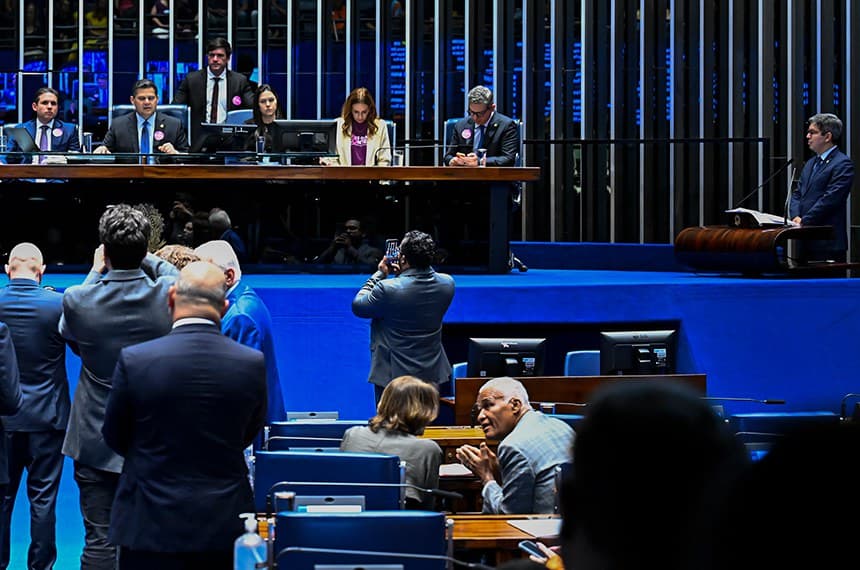
The Plenary of the Federal Senate approved, on March 10, 2026, a bill authored by the Executive Branch that promises one of the largest restructurings of the federal public service in the country’s history. Bill (PL) 5.874/2025 not only reorganizes and values various careers but also introduces the creation of over 24,000 new permanent positions, with a significant focus on the education sector.
Among the most impactful provisions, the bill contemplates the creation of 3,800 new professor positions for higher education and over 9,500 for federal institutes of education, science, and technology, totaling approximately 13,000 new faculty members. In addition to the expansion of staff, the proposal innovates by establishing the direct election of rectors by the university community, institutes incentives for technical-administrative staff in education, and provides for the creation of the Federal Institute of Sertão Paraibano (IFSertãoPB). Following approval in the Senate, the text now proceeds to presidential sanction, a crucial step for its enactment into Brazilian law.
A Milestone in the Valorization of Public Service
The rapporteur of the bill, Senator Randolfe Rodrigues (PT-AP), government leader in the National Congress, highlighted the magnitude of the initiative, stating that approximately 270,000 federal employees will benefit in some way from the proposed changes. Attending the vote, accompanied by the President of the Chamber of Deputies, Hugo Motta, and the Minister of Management and Innovation in Public Services, Esther Dweck, Randolfe reinforced that this is the largest plan for restructuring and valorizing careers in the public service ever implemented in Brazil. He emphasized the role of President Lula’s government in the construction of the project, highlighting the commitment to democracy and the strengthening of institutions.
During his speech, Senator Randolfe Rodrigues made a point of mentioning that the approved bill also expands the gratification functions for border compensation to various categories of civil servants. Additionally, it reopens the deadline for former Amapá civil servants to be transferred to the Union’s staff. The rapporteur, in an assertive move to ensure the project’s speed, rejected the 94 amendments proposed by senators, maintaining the integrity of the Executive’s original proposal.
Details of the Creation of Positions and Restructurings
The approval of PL 5.874/2025 represents a significant investment in the operational and strategic capacity of the Brazilian State. The creation of over 24,000 new permanent positions covers various areas, reflecting a demand for reinforcement and qualification in different sectors. The details of the distribution of these positions are:
- National Health Surveillance Agency (Anvisa):
- 200 new positions for specialist in regulation and health surveillance.
- 25 for technician in regulation and health surveillance.
- Federal Universities:
- 3,800 new positions for professor of higher education.
- 2,200 for analyst in education.
- Federal Network of Professional, Scientific, and Technological Education:
- 9,587 new positions for professor of basic, technical, and technological education.
- 4,286 for technician in education.
- 2,490 for analyst in education.
- Ministry of Management and Innovation (MGI):
- 750 new positions for technical analyst of socioeconomic development.
- 750 for technical analyst of Justice and Defense.
In addition to the creation of positions, the bill institutes the Supplementary Staff in Extinction of Systems Analyst and Data Processing in the MGI. This mechanism aims at a gradual transition, where current employees remain in their positions, but new replacements by public examination are ceased, leading to the progressive extinction of the positions as they become vacant.
Other Crucial Measures Approved
The bill goes beyond the creation of positions, incorporating a series of other important changes for the public service:
Program for the Recognition of Knowledge and Skills (PRSC)
One of the points highlighted by the rapporteur is the creation of the Program for the Recognition of Knowledge and Skills in Education. This program will benefit the technical-administrative staff working in the public network of basic and higher education, offering an additional qualification. The initiative recognizes the importance of the experience and practical knowledge of these professionals for the quality of education.
New Tables and Expansion of Benefits
- Remuneration: Established new remuneration tables for the positions of physician and veterinarian of the career plan of Education.
- Culture: Amendment of the special plan of positions of Culture, seeking a valorization of the professionals of the area.
- Tax and Customs: New remuneration tables for the tax and customs career of the Federal Revenue and Labor Tax Audit.
- Federal Territorial Expert: Reorganization of the career of federal territorial expert.
- Civil Defense: Possibility of working in a special regime of shifts or scales in the National Secretariat of Civil Defense, recognizing the continuous and emergency nature of its activities.
- Compensation for Border: Expansion of the right to compensation for exercise in international border units, now including employees of the Brazilian Forest Service, ICMBio, Anvisa, and the Brazilian Intelligence Agency (Abin).
The New Career of Technical Analyst of the Federal Executive Branch (ATE)
One of the most significant innovations is the creation of the career of technical analyst of the Federal Executive Branch (ATE). This unified career will be formed by the transformation of 6,900 vacant positions of various administrative specialties, currently distributed by different bodies. Professionals with training in crucial areas such as administration, accounting, library science, and archival science will now integrate this single career, with allocation in the Ministry of Management and Innovation (MGI).
The remuneration of these employees will be composed of a basic salary and the Gratification for Performance of Executive Activities (GDATE). The GDATE may reach up to 100 points, with each point valued at R$ 61.20. Its distribution will be based on individual evaluation (up to 20 points) and institutional results (up to 80 points). It is important to note that personal advantages already received by employees will be preserved, and if there is a reduction in remuneration after the migration, a Personally Identified Nominal Advantage (VPNI) will be created to compensate for the difference. With the reclassification scheduled for April 2026, the top of the career may reach approximately R$ 15,800.
The development in the ATE career will depend on clear criteria: progression after 12 months in each standard and obtaining a minimum score in performance evaluations. Promotion between classes will require additional points, linked to the professional experience, training, and academic qualification of the employees.
Gratifications and Special Work Regimes
Temporary Gratification for Execution and Support
The bill also provides for the creation of the Temporary Gratification for Execution and Support of Technical and Administrative Activities. This benefit will be destined for employees who are not linked to structured careers but who perform essential functions in various bodies of the Executive Branch. It will be limited to 4,430 gratifications for higher-level positions and 32,550 for intermediate-level positions, guaranteeing financial recognition to these workers.
On-Call and Alternate Shift Regimes
The legislation also regulates the possibility of adopting on-call or alternate shift regimes for federal employees whose activities demand continuous provision of services. This will allow the implementation of differentiated work schedules, such as six-hour daily shifts or on-call regimes for services that operate 24 hours. For employees of the central body of the National System of Protection and Civil Defense, the text authorizes workdays exceeding eight hours in contexts of monitoring, prevention, and response to disasters, recognizing the criticality of their functions.
Administrative Simplification and Valorization
Medical Evaluation by Telemedicine
A modern and pragmatic administrative change is the authorization for the performance of medical-expert examinations by telemedicine or documentary analysis. This measure aims to simplify the medical evaluation procedures of public employees, optimizing resources and time. In addition, the bill readjusts the remuneration of the positions of physician and veterinarian in the Career Plan of Technical-Administrative Positions in Education, reinforcing the valorization of these professions.
Readjustments for Tax Auditors
The PL also incorporates provisions resulting from salary negotiations with careers in the federal public service. For the tax auditors of the Federal Revenue and Labor, for example, the text provides for a readjustment of 9.22% in the last class of the career. The efficiency and productivity bonus paid to these employees may reach approximately R$ 11,500 in 2026, with the expansion of the percentage of this bonus for retirees and pensioners with longer retirement time, ensuring equity and recognition.
Democratization of University Management: Elected Rectors
One of the most anticipated changes, and one that reflects a significant democratic advance, is the modification in the process of choosing rectors of federal universities. The current rules allow that, after consultation with the university community, the institutions forward a three-name list to the federal government, and the President of the Republic can choose any of the names. The approved text eliminates the requirement of the three-name list, determining that the indication of the rector should directly reflect the result of the internal consultation. This change empowers the academic community and strengthens university autonomy.
Budgetary Impact
The measures contained in the bill, which involve the restructuring of careers, creation of positions, and readjustments, will have a considerable budgetary impact. According to government estimates, this impact is approximately R$ 4.16 billion in 2026, followed by R$ 5.6 billion in 2027 and 2028. An investment that reflects the priority given to the modernization and valorization of the federal public service.
Final Considerations
The approval of PL 5.874/2025 by the Federal Senate is a decisive moment for the Brazilian public service. It represents a continuous effort to modernize, valorize, and strengthen federal institutions, with a special focus on education, a fundamental pillar for the country’s development. The expectation now focuses on the presidential sanction so that these important changes become a reality for thousands of employees and for the Brazilian population.